Rocket Pool: The RPL Token
Insurance and incentives

Why Two Tokens?
Rocket Pool has two tokens:
rETH — For liquid stakers (covered last post)
RPL — For node operators
RPL is what keeps node operators honest.
RPL as Insurance
When you create a minipool, you’re being trusted with other people’s ETH. 24 ETH from liquid stakers, to be exact.
What if you run your validator badly? What if you get slashed?
RPL collateral is the answer.
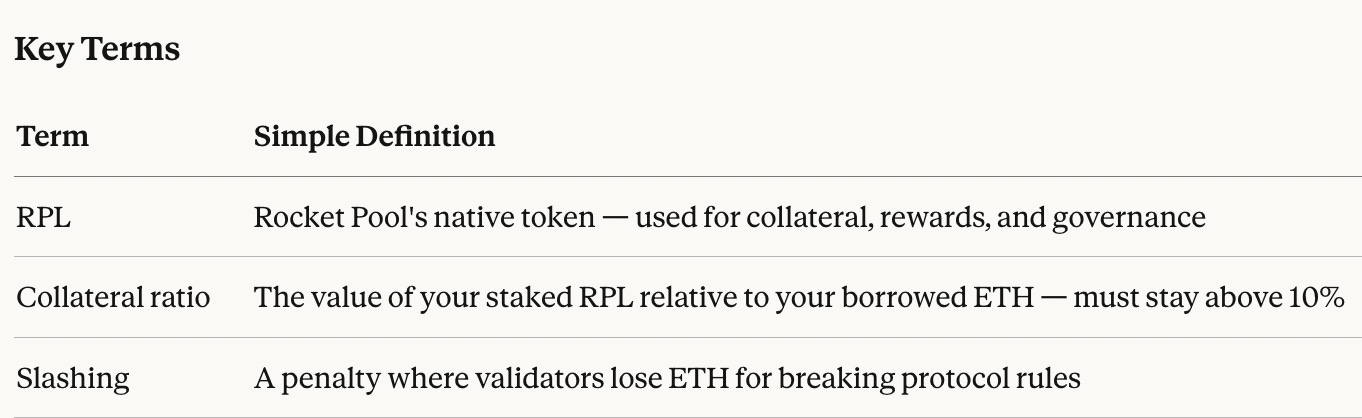
Node operators must stake RPL worth at least 10% of their borrowed ETH. If something goes wrong, this RPL can be sold to compensate the liquid stakers who lost out.
It’s insurance. Skin in the game.
How Much RPL?
Minimum: 10% of borrowed ETH value.
For an 8 ETH minipool, you borrow 24 ETH. So you need at least 2.4 ETH worth of RPL.
Maximum (for rewards): 150% of borrowed ETH value.
The more RPL you stake, the more rewards you earn — up to a cap.
RPL Rewards
Node operators don’t just earn ETH from running validators. They also earn RPL rewards.
Every 28 days, the protocol distributes new RPL to node operators based on how much they’ve staked.
This creates an incentive loop:
Stake more RPL → Earn more RPL rewards
More rewards → More reason to run minipools
More minipools → More decentralisation
Governance
RPL holders can vote on protocol decisions. Fee changes, upgrades, parameter adjustments.
It’s not just collateral — it’s ownership in the protocol.
The Catch
RPL is volatile. Its price moves independently of ETH.
If RPL drops in value, your collateral ratio drops too. Fall below 10%, and you stop earning RPL rewards until you top up.
You’re exposed to two assets: ETH and RPL.
Key Takeaway
RPL is Rocket Pool’s insurance and incentive token.
Node operators stake it as collateral. The more they stake, the more rewards they earn. It aligns incentives and protects liquid stakers.